
Baby Sound Remix
Play a face-to-face sound game. Respond to every attempt, then add small changes so you and your baby can build a playful exchange from simple syllables.
- 6 months
- No prep needed
- At home
- About 5 minutes
Developmental benefits
- Language:Hearing clear mouth movements, expressive voices, and simple syllables encourages your baby to imitate and experiment with a wider range of sounds.
- Cognitive:Listening to varied sounds and combining familiar syllables in new ways gives your baby early experience creating something new from what they hear.
Preparation
What You’ll Need
Step 1
Try a Sound Together
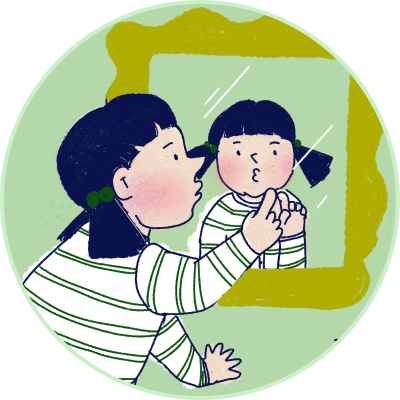
Sit face-to-face and make eye contact. Slowly say “ma-ma” with a clear mouth movement, then wait. When your baby attempts a sound, repeat it back as your response.
What to notice
- Repeats a syllable you make and waits for your response
 Communicating and Speaking
 - Smiles and looks at you when you gently touch their face
 Relationships with Adults
Tips
- Your baby may repeat a syllable without attaching meaning to it yet. These early imitations are part of learning how sounds work.
- Use an expressive pitch and an animated face to make the sound easier to notice.
- The sound does not need to be exact. Respond first, then model the syllable again.
Step 2
Change the Syllable
Slowly introduce another syllable, such as “ba” or “boo.” When your baby imitates you or makes a new sound, answer with a similar sound. If you hear something like “ba-ba,” you might invite Dad to join the exchange.
What to notice
- Attempts a familiar baby sound such as “ma-ma” or “ba-ba” Communicating and Speaking
- Repeats a syllable after hearing your encouragement
 Sense of Identity and Belonging
Tips
- If no new sound appears today, simply try the exchange again another time.
- Pause after each sound so your baby has time to respond.
Step 3
Add New Sound Ideas
When Dad joins, let him chat with your baby using his natural voice and rhythm. Add another sound source, such as softly shaking a rattle while saying “da-da-da.” Follow any new sound your baby offers and keep the exchange going.
What to notice
- Produces a new sound after listening to the sounds in the game
 Creativity
 - Watches the rattle while listening to its “da-da” sound
 Exploration and Discovery
Tips
- A second caregiver’s different pitch, tone, and rhythm can give your baby another voice pattern to notice.
- Follow your baby’s lead too. If they say something like “da-da,” answer with the same rhythm or pair it with a toy that makes a similar sound.
Better Parenting Content Team · Updated September 11, 2026