
Same, Different
Shake and tap different toys to discover and compare the sounds hidden inside.
- 9 months
- Quick prep
- At home
- About 15 minutes
Developmental benefits
- Cognitive:Shaking and patting several toys helps your baby notice and compare that some objects make sounds while others remain quiet.
- Movement:Looking toward, reaching for, grasping, shaking, and patting the toys helps your baby coordinate what they see with precise hand movements.
Preparation
What You’ll Need
- 1
Hand rattle
- 2
Teddy bear
- 3
Sealed sensory bottle filled with dry beans
- 4
Crinkle cloth book
Step 1
Shake It—Hear the Sound
Begin a sound exploration with your baby. Gently shake the rattle where they can see it. When your baby looks toward the sound, offer the rattle. If their movement makes it ring, respond with delight: “You shook it, and the rattle made a sound!”
What to notice
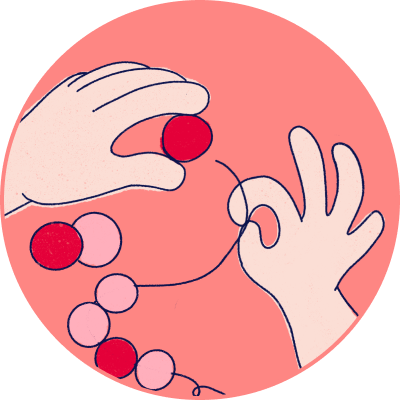
- Shakes the handbell repeatedly to make it ring
 Exploration and Discovery
 - Looks at the rattle in your hand and takes it
 Fine Motor
Tips
- If your baby cannot shake the rattle yet, guide the movement gently, then reduce your help and leave time for their own exploration.
- Choose age-appropriate toys with no loose small parts. Keep sounds gentle and do not shake a noisy toy close to your baby’s ear.
- Offer only two or three toys at a time so your baby can focus on each one.
Step 2
Does the Bear Make a Sound?
After your baby has explored the rattle, place the teddy bear nearby. Let them touch, shake, or pat it. When your baby pauses or looks at you, name the contrast: “Hmm—the bear is quiet.”
What to notice
- Shakes and pats the bear to explore it Exploration and Discovery
- Listens to find out whether Teddy makes a sound
 Attending and Understanding
Tips
- Your baby may shake, touch, grasp, mouth, or toss the bear. These are all natural ways of exploring skills related to #C-EnD.
- Your baby may not notice the contrast with the rattle right away. There is no need to repeat that the bear is quiet or expect an immediate response.
Step 3
Try More Toys
Place the other toys within reach and follow whichever one your baby chooses. Explore together, noticing that some toys make sounds while others remain quiet.
What to notice
- Finds several toys that make sounds
 Emergent Mathematical Thinking
 - Uses different grips to explore different toys Fine Motor
Tips
- There is no need to quiz your baby or ask them to sort the toys into groups. Let the contrast emerge through play.
- Follow your baby’s choice and respond naturally: “That one makes a sound too,” or “This one is quiet.”
Better Parenting Content Team · Updated September 11, 2026