
Shape Hopscotch
Draw large shape spaces with chalk and jump among them while naming and matching each shape.
- 4 years
- Quick prep
- Outdoors
- About 30 minutes
Developmental benefits
- Cognitive:Drawing, finding, and jumping to shapes gives your child repeated practice noticing and identifying each shape’s features.
- Movement:Jumping forward, leaping between shapes, and landing steadily gives your child practice with leg strength, balance, and whole-body coordination.
Preparation
What You’ll Need
- 1
Colored chalk
- 2
an open paved space where chalk drawing is allowed
Step 1
Draw the Shape Spaces
Draw a row of large shapes in different colors. Ask which ones your child knows and briefly describe any unfamiliar features. Then let your child help extend the route.
What to notice
- Names at least a triangle, circle, and square
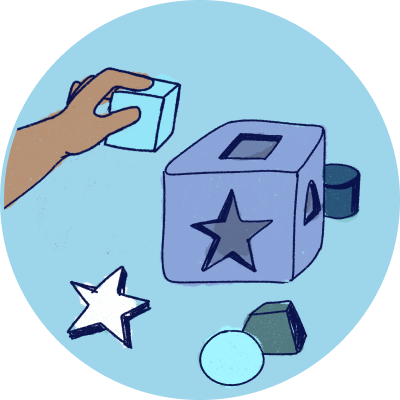 Geometry and Spatial Sense
 - Draws irregular shapes on the ground with chalk
 Fine Motor
Tips
- As your child draws, encourage a variety of shapes. You can also give a small mission: “Can you add a triangle?”
- Add any missing shapes to open spaces in the row so every shape appears somewhere. This will make each requested shape easier to find during hopscotch.
Step 2
Jump from Shape to Shape
Choose one shape each and jump only to matching spaces from start to finish. Or ask another caregiver to call a color or shape, then race to find a matching space and name where you landed.
What to notice
- Jumps with both feet between spaces
 Gross Motor
 - Identifies the shape they selected in each row Geometry and Spatial Sense
Tips
- Your child may love simply hopping from one end to the other. Follow that interest and enjoy it before introducing another rule.
- Do not race while the second game is still new. Demonstrate first and name the color and shape beneath your feet so your child can copy you.
- A shape can look unfamiliar from a new direction. Invite your child to move around it, look again, and find the shape they need.
Step 3
How Can You Reach That Shape?
Take turns choosing a space for the other person to reach. Begin nearby and gradually choose a farther one. If your child cannot reach, suggest a bigger step and offer a steady hand when needed.
What to notice
- Jumps to the named square after hearing your instruction
 Attending and Understanding
 - Looks to you expectantly when they encounter difficulty
 Relationships with Adults
Tips
- When holding your child’s hand to “fly” across, first invite them to squat and jump using their own strength. Follow the upward motion with light support; do not pull suddenly or forcefully.
- Invent more rules together. You can even draw new shapes and hop on them as you extend the path.
Better Parenting Content Team · Updated September 11, 2026