
Getting Ready for Bath Time
Turn getting undressed into a familiar little ritual before each bath. Repeating the same warm sequence helps your baby recognize the routine and feel secure.
- 9 months
- Quick prep
- At home
- About 5 minutes
Developmental benefits
- Social/Emotional:Repeating the same steps before bath time gives your baby a predictable routine that supports a sense of security and belonging.
- Language:Hearing simple phrases paired with undressing movements helps your baby connect words with a familiar daily sequence.
Preparation
What You’ll Need
- 1
A baby bathtub
Step 1
Let’s Get Undressed
It’s bath time! Begin the same little ritual each day. Tell your baby, “First we get undressed, then we take a bath.” Help them take off their clothes, then go to the bathroom together. Repeating the sequence helps it become familiar.
What to notice
- Raises an arm after hearing your prompt
 Attending and Understanding
- Shows excitement as the familiar pre-bath routine begins
 Memory
Tips
- Talk with your baby as you help them undress so this everyday task feels relaxed and enjoyable.
- At nine months, much of the world still feels unfamiliar. Your steady presence helps your baby feel safe and happy.
- Use short, clear phrases with each movement: “Bend your arm,” or “Kick your leg.” This helps your baby connect the words with how their body moves.
Step 2
Little Hands, Big Hands
As you help your baby undress, add a warm little game. Compare your hands, touch their toes, or look at your noses together. Follow what they enjoy and talk about what is the same or different between you.
What to notice
- Looks back and forth between your hand and their own
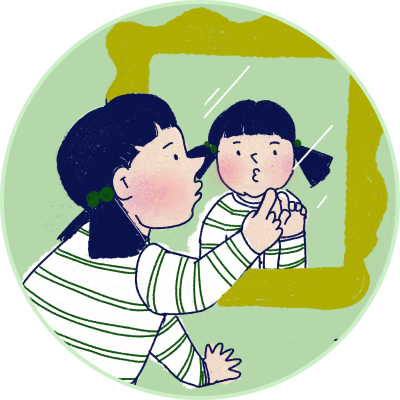 Sense of Identity and Belonging
- Smiles or laughs when you gently touch them
 Relationships with Adults
Tips
- When your baby leans toward you or grasps your hand, respond right away: “Your little hand is so strong!” A warm response encourages more gestures, sounds, and expressions.
- Compare other body parts too. Help your baby touch their nose, then yours, so they can notice their own body and another person’s.
- Your baby may gaze at you or giggle. These are ways of telling you, “I like this game.”
Step 3
Bath Time Comes Next
Once the routine is familiar, notice whether your baby anticipates what comes next after hearing your usual cue. When they lift an arm or leg to help, celebrate their participation. The familiar rhythm and your presence can help them feel at ease.
What to notice
- Lifts a leg before you take off their pants Sense of Identity and Belonging
- Waves their arms and legs excitedly after getting undressed
 Emotional Functioning
Tips
- Before the bath, let your baby choose one or two favorite bath toys to make the routine even more enjoyable.
- When a small action leads to the result your baby expects, they feel noticed and become more confident about joining family routines.
- As the sequence becomes familiar, your baby may lift an arm as soon as they hear, “Arm up,” and take an active part.
Better Parenting Content Team · Updated September 11, 2026